
What is a PO number? A complete guide to purchase order numbers
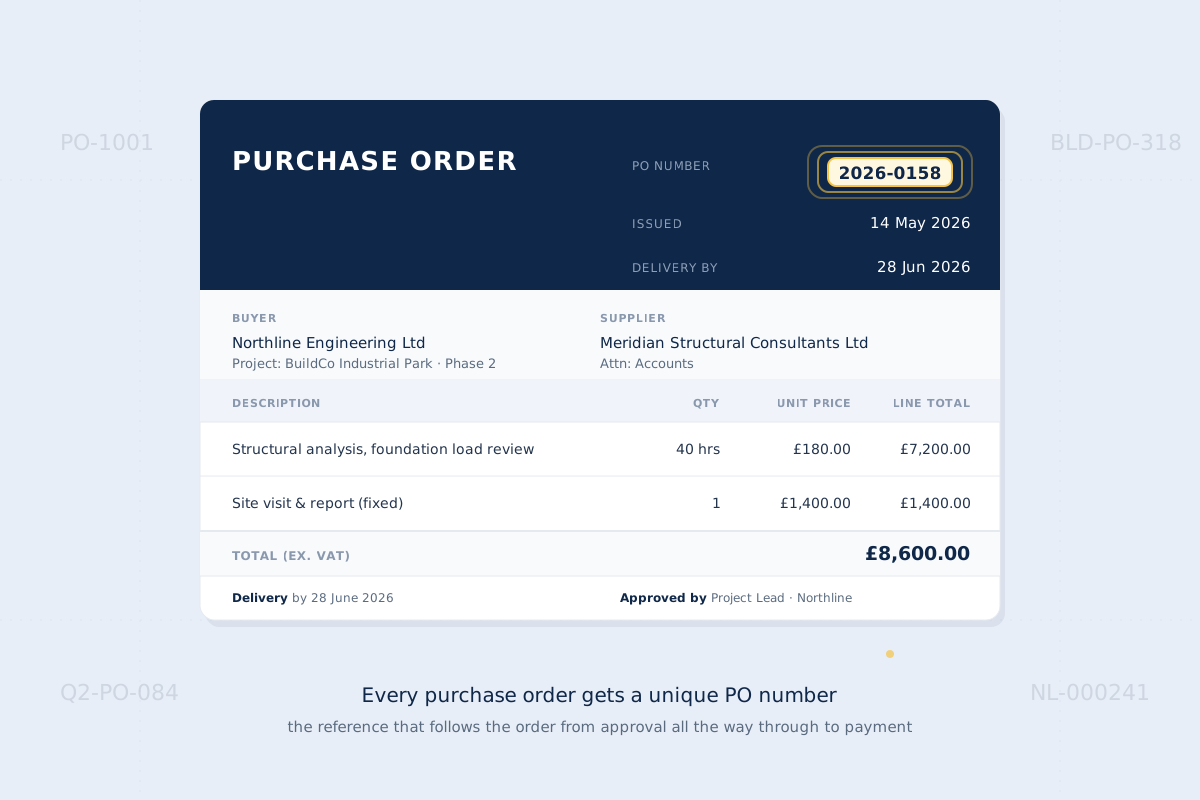
A PO number is the unique reference on a purchase order. It's the label that lets a specific order be tracked from the moment it's approved to the moment it's paid — and when the invoice eventually arrives, it's the field that ties the invoice back to the original order.
This guide covers what a PO number is, what one looks like, how they're generated, and — most usefully — where the PO number shows up on the invoices you eventually receive. If you've ever seen "PO number required" on a supplier's invoice and weren't sure what to put there, this is for you.
What is a PO number?
A PO number, short for purchase order number, is the unique reference assigned to a purchase order when it's created. Every purchase order gets one, and no two orders share the same number. That uniqueness is the whole point of it: it means one specific order can be referred to without confusion by anyone involved — the buyer's team who raised it, the supplier who received it, and the accounts department who'll match it against an invoice later.
You can think of a PO number as the order's name. "The order for the timber" is ambiguous if you've placed several. PO-2847 is not.
A PO number is the thread that runs through the whole life of an order — it links the approval, the delivery, and the invoice back to one specific commitment.
What does PO stand for?
PO stands for purchase order. So a PO number is a purchase order number — the two terms mean the same thing. On invoices and documents you may also see the field abbreviated as "P.O. No.", "PO#", "PO Ref", or "Customer PO". They're all the same field.
What does a PO number look like?
There's no universal format for PO numbers. Each business sets its own numbering convention. Most patterns combine a short prefix with a sequential number, sometimes with a date or project code mixed in. Here are the common ones you'll see in practice:
| Example | Structure |
|---|---|
PO-1001 | Simple prefix and a running number. Clean and common at small businesses. |
PO-2026-0042 | Prefix, year, sequence — useful for seeing at a glance when an order was raised. |
BLD-PO-318 | Project or department code first — handy when several projects run at the same time and each has its own PO series. |
NL-000241 | Company code and a zero-padded sequence. a common shape at slightly larger businesses. |
Q2-PO-084 | Quarter or period marker up front — common when reporting cycles matter. |
The specific style doesn't matter. What matters is that PO numbers are unique and never reused. Reusing a number breaks the chain: you can't tell which order an invoice is billing for, and reconciliation stops working. More on that in the best-practice section below.
How are PO numbers generated?
There are two approaches, each with clear trade-offs:
Manually
If you create purchase orders in a template — Word, Excel, Google Sheets, whatever — someone keeps a running list and assigns the next number by hand. This works fine for a handful of orders a month. The risk shows up as volume climbs: numbers get skipped, or two people raise POs with the same number on the same day, or a spreadsheet gets copied and the sequence forks. Once those mistakes happen, invoice-matching downstream stops being reliable. If you're starting out this way, you should use a purchase order template.
Automatically
A dedicated purchase order system assigns the next number the moment a PO is created. The sequence is always clean, unique, and never repeats. That's the main advantage of automating: the numbering stops being something a human has to remember. Most businesses start with manual numbering and move to automatic when the volume gets uncomfortable — usually around the point where several people are raising POs against shared project budgets. If you're weighing that move, our guide to purchase order software walks through what to look for.
Where the PO number appears on an invoice
This is where PO numbers earn their keep. When a supplier bills you for delivered work, they quote your PO number on their invoice. That's not a formality — it's the field that lets you tie the invoice back to the original order, and confirm the invoiced amount matches what was committed.
Here's what to expect on the invoice you receive:
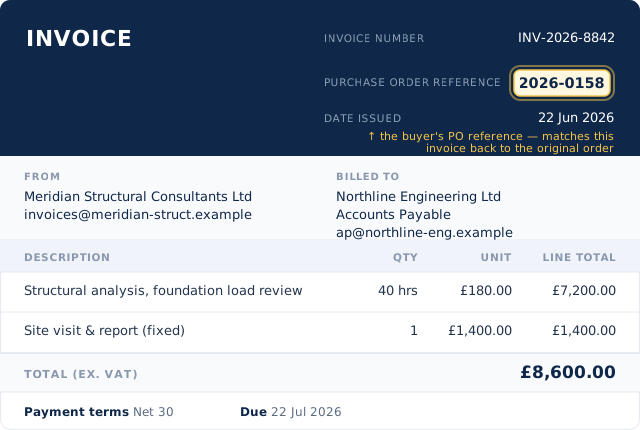
The invoice above shows the pattern. The supplier's own invoice number sits at the top-right — that's their internal reference for the bill. But the buyer's PO number is quoted in its own labelled field, exactly as it was on the original purchase order. That's the piece of information that closes the loop.
If an invoice arrives without a PO number — or with the wrong one — you can't easily tell which order it relates to, or whether the amount agrees with what was committed. This is why many finance teams have a hard rule: no PO number on the invoice, no payment. The number is the link between "we agreed to this" and "we're now being billed for it." Without it, the invoice is essentially a claim without a receipt.
For the full walkthrough of how the PO, delivery, and invoice get compared before payment goes out, see three-way matching.
PO number vs invoice number
These get mixed up often, and it's worth being clear on the difference — because both usually appear on the same invoice.
| PO NUMBER | INVOICE NUMBER | |
|---|---|---|
Created by | The buyer, when the order is raised | The supplier, when the invoice is issued |
When | At the start of the order lifecycle | At the end, once work is delivered |
Job | Identifies the order | Identifies the bill |
The invoice number is the supplier's own reference — it's how they file the invoice on their side. The PO number is your reference, quoted back to you. When you receive an invoice, both are usually visible, but the PO number is the one you use to match the invoice to the order in your own records.
PO number vs other numbers you might see
A few other reference numbers turn up on purchase-related paperwork. It's worth knowing which is which:
- Order number. Sometimes used interchangeably with PO number, but strictly, an order number can also mean a supplier's internal sales-order ID. If in doubt, "PO number" is the unambiguous term.
- Reference number (or "ref"). A generic catch-all for any tracking code. Suppliers sometimes quote a reference number that isn't your PO number — always check the field label.
- Part number or SKU. A code for the specific product being ordered, not the order itself. A PO with three line items has one PO number and three part numbers.
- GRN number. The goods received note reference, generated when delivery is checked in. Part of the matching process, but distinct from the PO number.
Best practices for numbering purchase orders
Whether numbering happens by hand or via software, a few principles keep the system useful:
- Unique per order. Every PO gets its own number. If an order is cancelled and re-raised, don't recycle the old number — create a new one.
- Never reused. Continue the sequence across projects and years. Rolling back to zero at year-end saves nothing and confuses reconciliation later.
- Consistent format. Pick one pattern for the business and stick with it. Mixing formats mid-year makes filing and searching painful.
- Meaningful, if useful. Adding a project or department code (BLD-PO-318) helps you glance at a number and know where it belongs. Keep it short — long numbers stop being memorable.
- Sequential, not random. A running sequence makes it easy to see roughly when an order was raised, and easy to notice gaps.
- Automate at scale. Once you're raising more than a handful of POs a week across several people, spreadsheet-based numbering starts to fail. That's usually the signal to move to a system.
Frequently asked questions
It's the purchase order number the buyer originally issued, quoted back on the supplier's invoice. It lets the buyer match the invoice to the order it relates to before paying.
No. The PO number is created by the buyer when ordering. The invoice number is created by the supplier when billing. An invoice usually shows both — the supplier's own invoice number, plus the buyer's PO number quoted from the original order.
They shouldn't. PO numbers are meant to be unique and never reused — that's the whole point. Reused numbers make it impossible to tell which order an invoice belongs to and break reconciliation.
If you're using purchase orders at all, yes — each one should have its own. It's what makes tracking and invoice matching work.
Usually a short prefix and a running number — for example PO-1001, PO-2026-0042, or BLD-PO-318. There's no universal format; each business sets its own convention. What matters is that the number is unique and never reused.
Near the top of the document, in a labelled field, alongside the issue date and buyer/supplier details. On the supplier's invoice later, it's quoted as "PO No.", "Customer PO", or a similar field label.
PO numbers, assigned automatically
CostTracker gives every purchase order a clean, unique number the moment it's raised, and keeps the order, delivery, and invoice tied to it. No manual list to maintain. Set up in an afternoon.

